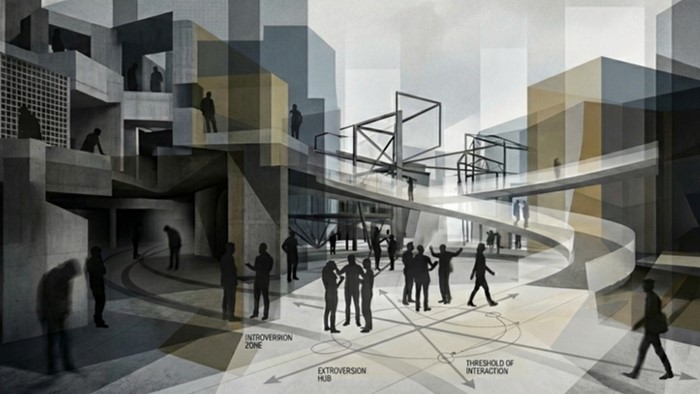
A design-led workshop translating human personalities and mapping city characters to form inclusive, psychologically responsive architectural spaces.
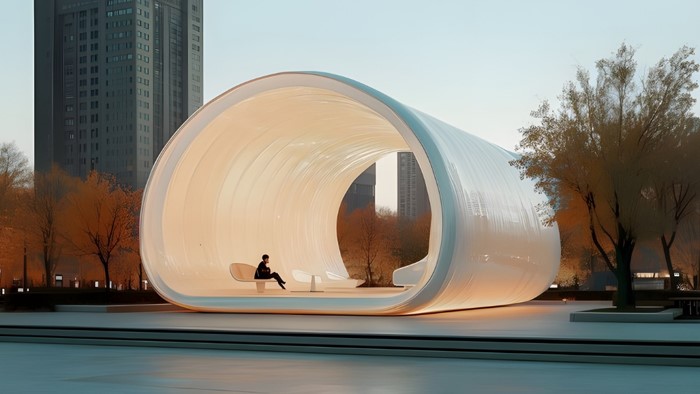
This workshop explores the profound relationship between human psychology and architectural space, investigating how personal traits shape spatial experience and how architecture, in turn, can mediate psychological conflict and promote inclusion. Rooted in environmental psychology, behavioral studies, and experimental architectural practice, the workshop invites participants to examine the question: Who are we in space, and how does space respond to who we are? Using the scientifically validated Big Five personality framework, participants will first identify their dominant spatial personality. In parallel, the city of Berlin will be analyzed and mapped through layered urban, sensory, behavioral, and symbolic criteria to reveal its diverse "spatial characters." Through a guided one-day urban excursion and on-site fieldwork, students will conduct behavioral and spatial forensics, documenting how architecture influences movement, interaction, comfort, stress, and perception. The core design challenge requires participants to design from their own psychological profile while intervening in a spatial context that directly contradicts their personality, transforming conflict into a generator for inclusive and mediating architectural installations. Each project will be grounded in verified architectural principles. Responding to the growing global focus on mental health, user-centered design, and emotional intelligence in architecture, this workshop offers students a rare opportunity to merge psychological awareness with spatial design thinking. The workshop culminates in a curated exhibition featuring participants personality-driven spatial intervention proposals, individual design development posters, a collectively authored Spatial Personality Atlas, and a shared Berlin Personality Map documenting selected sites before and after participants' intervention.
Mayar Dawoud
Architecture and Human-Centered Design
KEY LEARNINGS
- Human-Centeredness
- Inclusivity and Spatiality